
If one room in your Phoenix home never cools down, your summer power bills keep climbing, or you see dust streaks around a ceiling register, your attic ductwork is probably leaking. The signs of leaky ductwork are easy to miss because the ducts sit out of sight in an attic that bakes all summer. ENERGY STAR reports that in a typical house “about 20 to 30 percent of the air that moves through the duct system is lost due to leaks, holes, and poorly connected ducts” (ENERGY STAR, Duct Sealing). That is cooled air you paid for, lost into a hot attic. Here is how to tell if your ducts are leaking and what a professional duct inspection and repair involves.
Why Attic Ductwork Is a Phoenix Problem
Most Valley homes run their supply and return ducts through an unconditioned attic. A U.S. Department of Energy guide states that “typical duct systems lose 25 to 40 percent of the heating or cooling energy put out by the central furnace, heat pump, or air conditioner,” and that attic ducts in hot climates often lose more (DOE, Improving the Efficiency of Your Duct System). It adds: “Duct repairs could be the most important energy improvement measure you can do if your ducts are in the attic.”
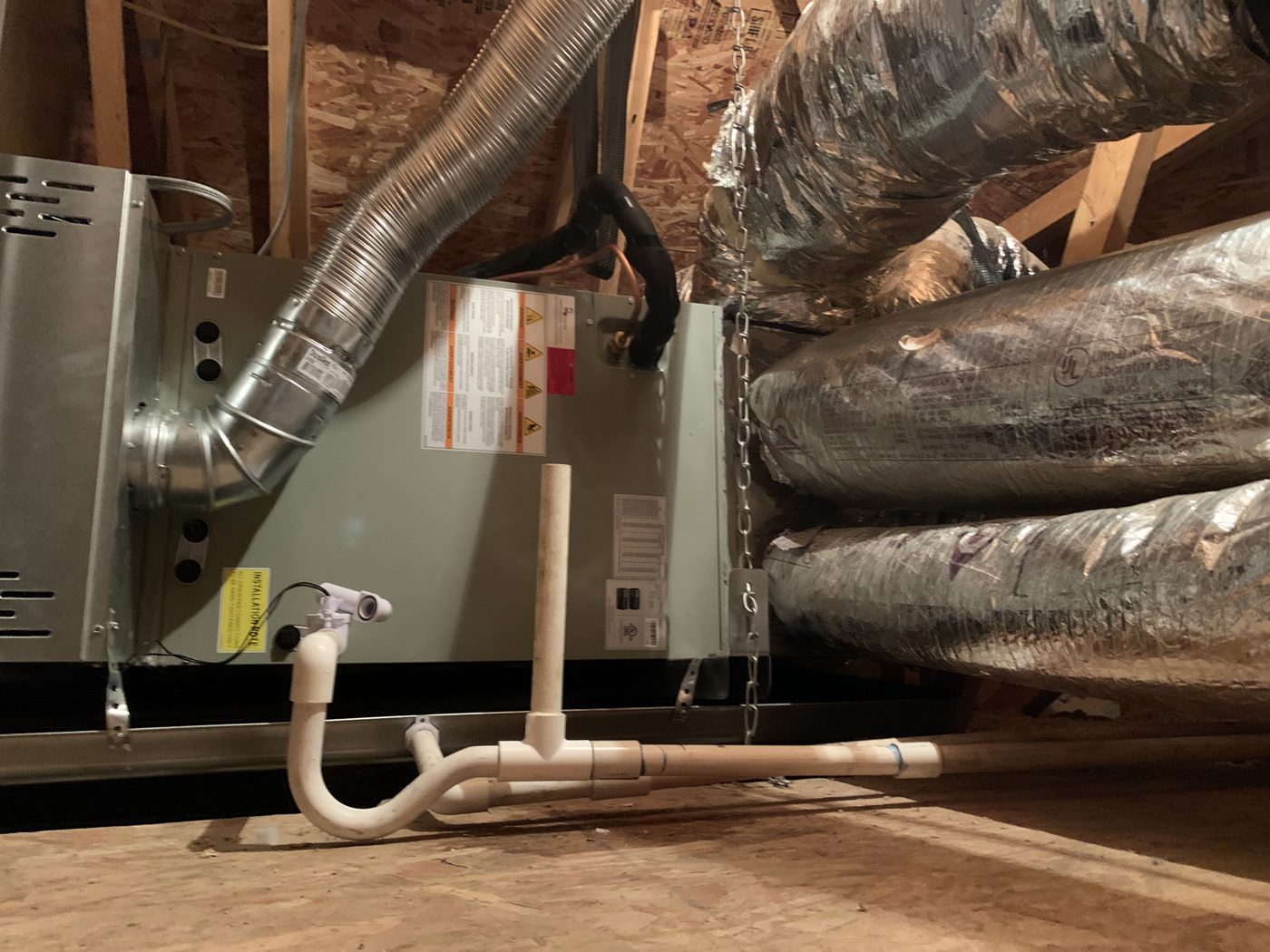
Ducts lose energy two ways, and both are worse in an attic: air leaks out through seams and joints, and cooled air warms up through the duct wall. The DOE guide notes that conductive losses “are typically at least as great as the energy losses due to air leakage,” so a leaky attic duct is usually an under-insulated one too.
Six Signs Your Ductwork Is Leaking
ENERGY STAR’s own list of warning conditions includes high summer and winter utility bills, rooms that are difficult to heat and cool, stuffy rooms, ducts located in an attic, crawlspace or garage, and tangled or kinked flexible ducts (ENERGY STAR, Duct Sealing, linked above). Here is how those show up in a Valley home.
1. Uneven cooling between rooms
The back bedroom is five degrees warmer than the living room no matter where you set the thermostat. The supply duct feeding that room may be disconnected, crushed or leaking most of its air into the attic before it reaches the register.
2. Weak airflow at a register
Hold your hand up to each supply register while the system runs. One with noticeably weaker flow usually has a leak, kink or loose connection behind it.
3. Rising summer bills with no change in habits
If usage is up and your thermostat setting is not, the system is running longer to deliver the same comfort, and air lost in the attic is a common reason.
4. An AC that runs constantly but never catches up
When a large share of the cooled air never reaches the rooms, the thermostat never satisfies and the compressor keeps running, adding wear on top of the energy cost. Our AC repair team checks the ducts as part of any diagnosis.
5. Extra dust and dirty registers
Return-side leaks pull attic air, insulation fibers and dust into the system and spread them through the house. The DOE guide points to “accumulations of soot or other dark material on the insulation where it covers loose duct joints”; dark streaks around a ceiling register are the indoor version.
6. Visible duct damage in the attic
If you can safely look into the attic, watch for flex duct that is kinked, sagging or crushed, joints wrapped in old cloth duct tape, insulation that has slipped off, and ducts pulled apart at a plenum or boot. The DOE guide warns that duct tape “often loses adhesiveness after a few years,” and ENERGY STAR says to seal with “mastic sealant or metal tape” and “never use duct tape, as it is not long-lasting.”
Symptom Checklist: Leaking Ducts or Something Else?
| What you notice | Points to leaky or damaged ducts | Could also be |
|---|---|---|
| One room always warm | Disconnected or crushed supply run | Sun exposure, thin attic insulation |
| Weak flow at one register | Leak or kink in that branch | Closed damper, blocked register |
| Whole house cools slowly | Large supply leak into attic | Low refrigerant, dirty coil, undersized system |
| Extra dust everywhere | Return-side leak pulling in attic air | Dirty filter, filter bypass |
The “could also be” column is why ducts should be checked alongside the equipment. A seasonal AC check-up covers one, a duct inspection the other.
Why You Should Not Patch Attic Ducts Yourself
It is tempting to go up with a roll of tape. The DOE guide advises against it, because duct leaks affect the pressure balance of the whole house. It states that “because of the possible effects that changing the duct leakage pattern can have on indoor air pollution, you should not attempt to repair duct leaks,” and that “safe duct repairs require a licensed heating, ventilating, and air-conditioning contractor.” A licensed HVAC technician must evaluate the home and the full duct system before anything is sealed.
What a Professional Duct Inspection Involves
- Visual inspection in the attic. Every accessible run, joint and plenum is checked for separation, crushing, missing insulation and failed tape.
- Pressure testing. The DOE guide describes measuring duct leakage by pressurizing the ducts with a calibrated fan, often with a blower door on the house, so the loss is measured rather than guessed.
- Air balance. Room-by-room airflow is compared against what each room needs.
- Sealing or replacement. Loose joints are sealed with mastic or approved metal tape. Crushed, torn or degraded flex duct is replaced. Under-insulated runs get insulation added.
- Verification. Airflow is rechecked at the registers after the work.
Our ductwork services page covers the repair, sealing and replacement options we offer for Phoenix, Scottsdale and Tempe homes.
Duct Sealing vs. Duct Replacement
Sealing is the right answer when the duct material is sound and the problem is at joints and connections. Replacement makes sense when flex duct has collapsed, the liner has torn, the insulation jacket has broken down, or the layout is wrong for the house. Many Valley homes need a mix: replace the worst runs, seal and insulate the rest. Because attic insulation and duct performance are so closely tied, see our post on HVAC insulation in the Valley and our insulation services.
Utility Programs That May Help
Rebates change, so verify current terms with your utility. As one example, SRP stated in December 2025 that “about 20% of the air moving through a duct system is lost because of improper installation” and that its duct test and repair program covers 75% of repair costs or up to $400 (SRP newsroom; repeated on the SRP blog in May 2026). Programs carry contractor and home-type requirements, so ask before scheduling.
Frequently Asked Questions
How can I tell if my ducts are leaking without going into the attic?
Compare airflow at every register with the system running, note any room that is consistently warmer, look for dust streaks around ceiling registers, and compare this summer’s bills with last summer’s. Two or more of these together justify an inspection.
How much cooled air does a leaky duct system lose?
ENERGY STAR puts typical losses at 20 to 30 percent of the air moving through the ducts, and the DOE guide puts total duct energy loss at 25 to 40 percent for typical systems, with attic ducts often losing more (both linked above).
Is duct sealing worth it on an older Phoenix home?
Older homes are often the best candidates, because original duct tape has usually failed and flex duct insulation has degraded in the attic heat. A technician can tell you whether sealing or replacement fits your house.
Should ducts be checked before I replace my air conditioner?
Yes. A new system still cannot cool rooms it cannot reach, so check the ducts before the equipment is sized, and pair the inspection with regular AC and heating maintenance.
What Phoenix Homeowners Say
“Service call for a hvac problem. Victor was terrific. Talked me through everything he did and saw in our attic.”
Scott W., 5 stars, Google review (2022)
Schedule a Duct Inspection in Phoenix
Legendary Energy LLC inspects, seals, repairs and replaces attic ductwork for homeowners in Phoenix, Scottsdale, Tempe and the surrounding Valley. We explain what we find and start with the least expensive fix that solves the problem.
Call (602) 266-9566 or contact us online to book a ductwork evaluation. Phones are answered Monday through Saturday.