
For most Phoenix and Scottsdale homes, a heat pump is the heating system that makes the most sense. Valley winters are mild, a heat pump already does the cooling job you need for most of the year, and it heats by moving warmth from outdoor air instead of burning fuel. A gas furnace still earns its place in some homes, especially where a gas line and a sound furnace already exist. This guide walks through the heat pump vs. gas furnace decision the way a technician would during a heating service visit, so you can see which system fits your house before replacing anything.
How Each System Heats a Valley Home
Heat pump
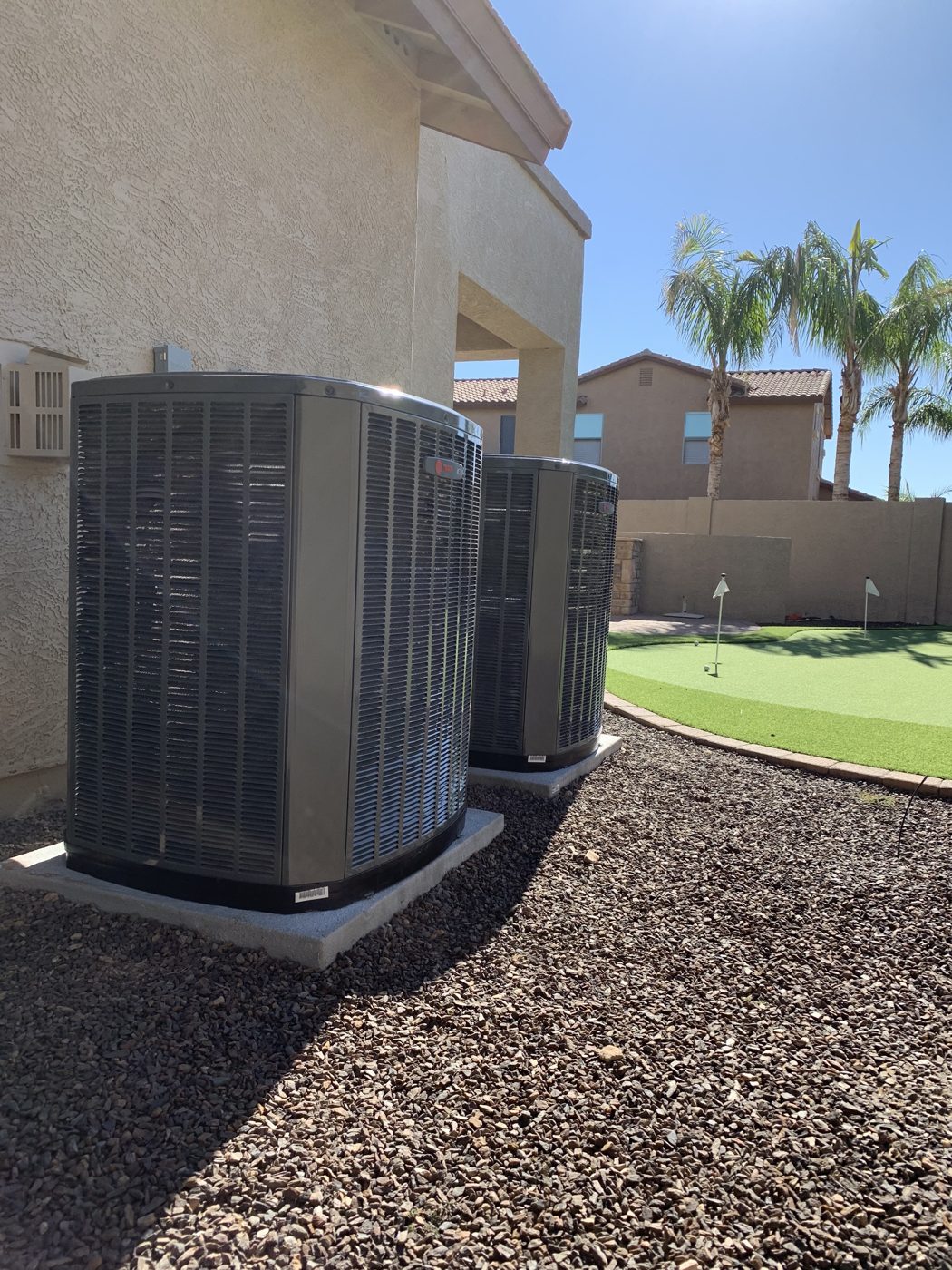
A heat pump is a refrigeration system that runs in both directions. ENERGY STAR describes a certified air-source heat pump as providing “highly efficient heating and cooling by extracting heat from outside into your home in winter and pulling the heat out of your home in the summer” (ENERGY STAR, Air-Source Heat Pumps). Because it moves heat rather than creating it, the same source says an air-source heat pump “can deliver up to three times more heat energy to a home than the electrical energy it consumes.” The outdoor unit you see is the same box that cools the house in July.
Gas furnace
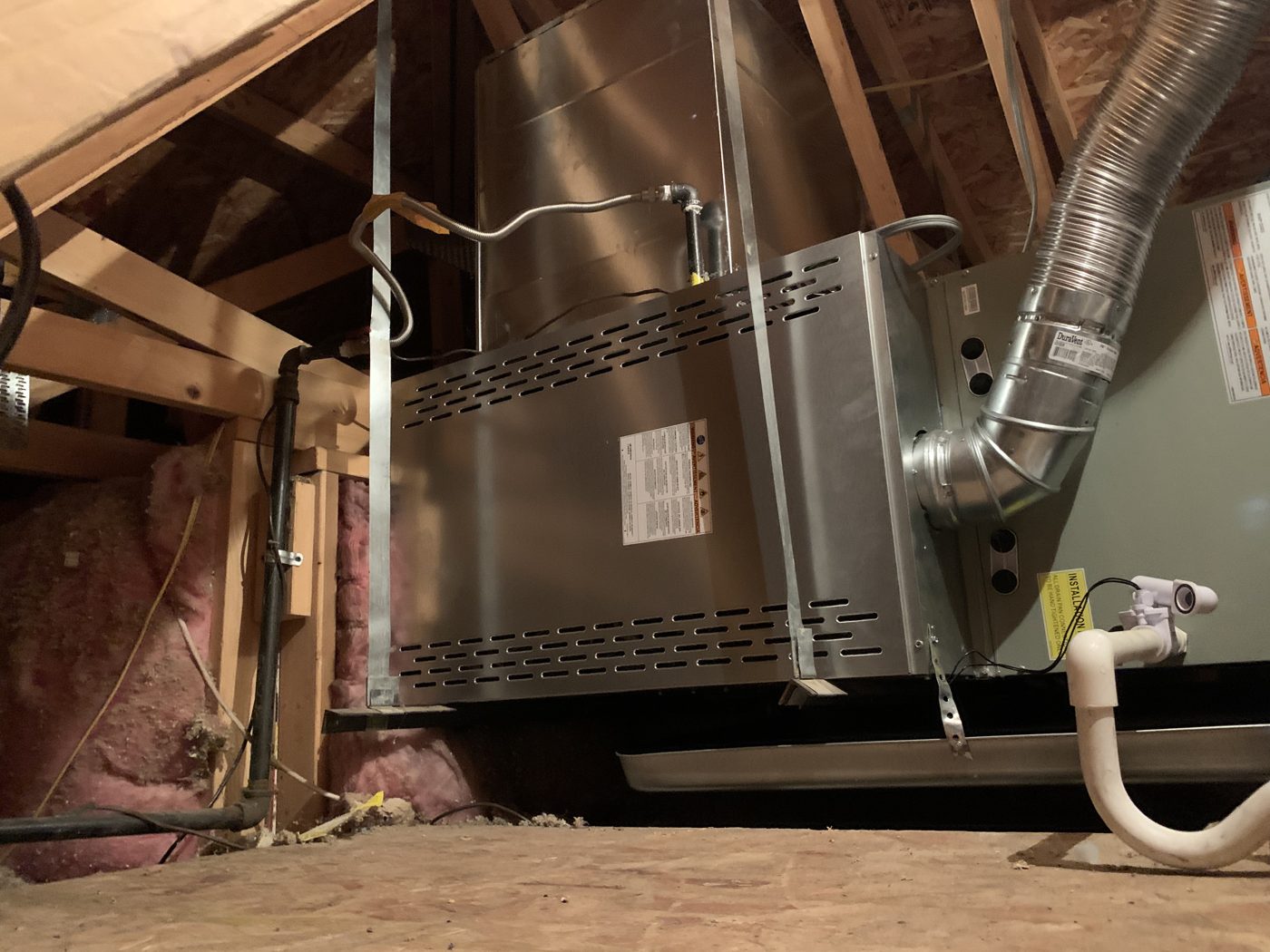
A gas furnace burns natural gas in a heat exchanger and blows air across it. Its efficiency is rated by AFUE, which the U.S. Department of Energy defines as the “ratio of useful energy output to energy input, expressed as a percentage (%), over the entire heating season” (DOE FEMP, Purchasing Energy-Efficient Residential Furnaces). That page treats an 80% AFUE furnace as the less efficient baseline and notes that every model meeting ENERGY STAR specifications is a condensing furnace. A furnace needs a separate air conditioner, so a furnace home runs two pieces of major equipment instead of one.
How Cold Does Phoenix Actually Get?
This number decides the comparison. The National Weather Service lists the 1991 to 2020 December normals at Sky Harbor as a 66.2 degree average high and a 45.3 degree average low (NWS Phoenix, December 2025 Climate Summary). On January 1 the normal high is 66 and the normal low is 45, and the record low for that date is 24 degrees, set in 1919 (NWS Phoenix, New Year’s Climatology). Overnight lows in the 40s with occasional dips into the 30s are what a Valley heating system has to handle, not weeks of sub-freezing weather. The Department of Energy puts it directly: “In moderate climates, heat pumps can be an energy-efficient alternative to furnaces and air conditioners” (DOE Energy Saver, Heat Pumps).
Heat Pump vs. Gas Furnace: Side by Side
| Factor | Heat pump | Gas furnace |
|---|---|---|
| Fuel | Electricity | Natural gas (electricity for the blower) |
| Cooling | Built in; one system heats and cools | None; needs a separate air conditioner |
| Heating rating | HSPF2 (ENERGY STAR split systems: 7.8 or higher) | AFUE (ENERGY STAR U.S. South: 95% or higher) |
| Cooling rating | SEER2 and EER2 (ENERGY STAR split systems: 15.2 and 11.0 or higher) | Rated on the paired AC |
| Fit for Phoenix winters | Strong; built for moderate climates | Works, but most of its capacity goes unused |
| Gas line and venting | Not needed | Required |
Thresholds come from the ENERGY STAR Version 6.2 heat pump specification and the ENERGY STAR furnace key product criteria, which place Arizona in the U.S. South region.
What the Efficiency Numbers Mean
- HSPF2 is seasonal heating efficiency for a heat pump. ENERGY STAR split systems must rate 7.8 or higher; cold climate ducted models must reach 8.1 (ENERGY STAR Version 6.2, linked above).
- SEER2 and EER2 are cooling efficiency. The same specification sets 15.2 SEER2 and 11.0 EER2 as split-system minimums. In Phoenix, these matter more to your annual bill than the heating rating does.
- AFUE is the share of purchased gas that becomes heat in the house. ENERGY STAR requires 95% or greater for furnaces sold in the U.S. South, which includes Arizona.
When a Heat Pump Makes Sense in Phoenix
- Your air conditioner is due for replacement anyway. A heat pump replaces the outdoor condenser, so you upgrade cooling and heating with one piece of equipment. Our AC installation page covers how we size and match systems.
- Your home has no gas service, or gas only feeds a water heater and cooktop. New gas piping for a furnace adds cost a heat pump avoids.
- You currently heat with electric resistance strips. A heat pump uses the same electricity far more effectively.
- You want fewer pieces of equipment and one maintenance schedule.
When a Gas Furnace or Dual Fuel Setup Makes Sense
- You already have a gas furnace in good condition. If the heat exchanger is sound and the unit is mid-life, keeping it and pairing it with a new high-efficiency air conditioner can be the practical choice. The DOE’s furnace guidance assumes an average residential furnace lifetime of 21 years (DOE FEMP page, linked above), so age matters.
- You want both. ENERGY STAR notes that “dual fuel systems allow for the flexibility of heating with a heat pump or with a more traditional gas or oil furnace” (ENERGY STAR, Air-Source Heat Pumps). In a Valley home the heat pump handles nearly every heating hour and the furnace sits in reserve.
What a Technician Checks Before Recommending Either One
On a heating evaluation, a licensed HVAC technician should look at the whole house before suggesting equipment:
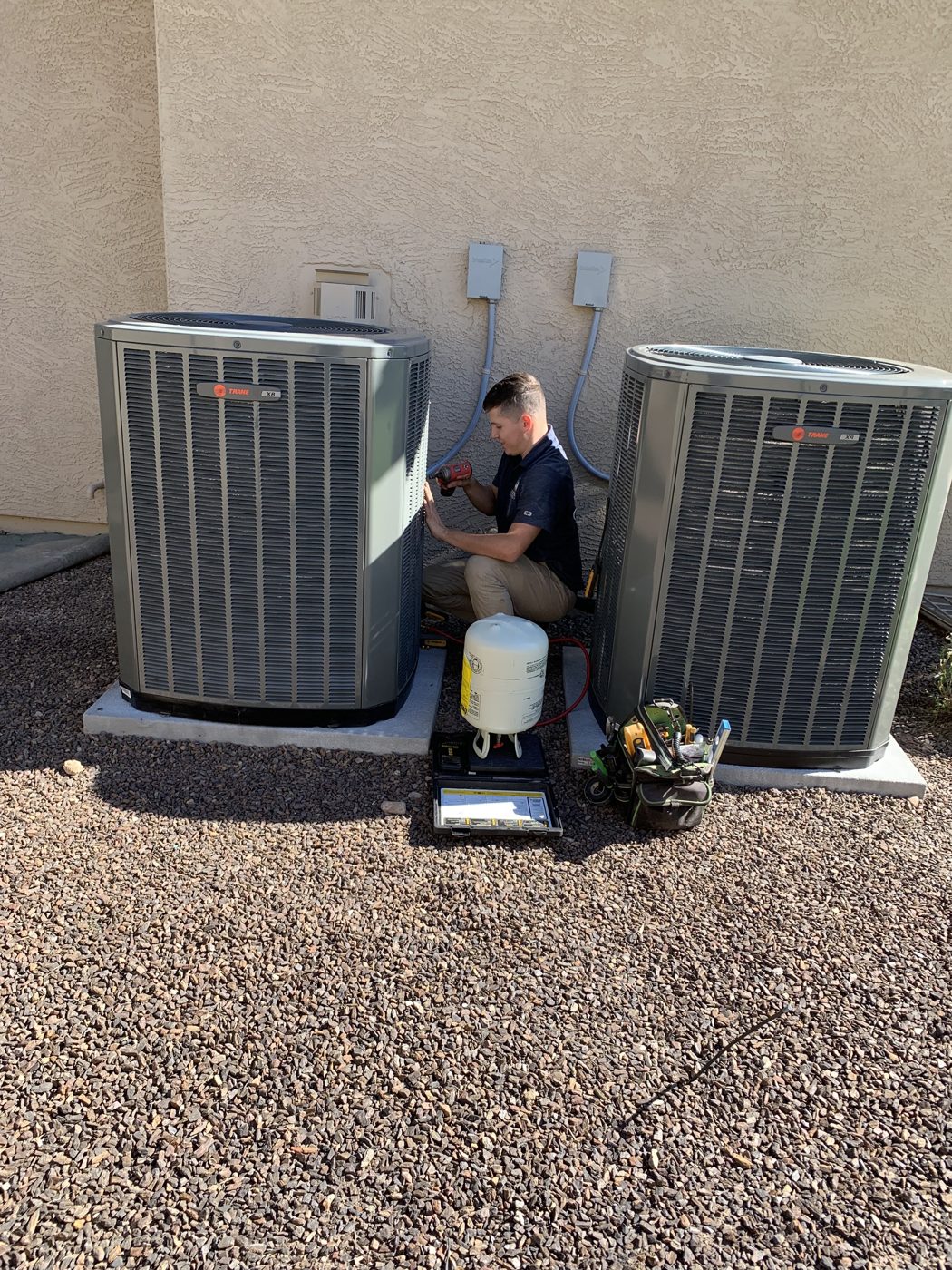
- Load calculation. Orientation, windows, insulation and ceiling height all change the size you need.
- Ductwork condition. Most Valley ducts run through the attic. If they leak, a new system will not perform as rated. See our ductwork services.
- Electrical and gas capacity. A heat pump may need panel capacity; a furnace needs gas supply and proper venting.
- Attic insulation. Thin insulation makes any system work harder.
- Utility programs. Rebates change often. As one example, SRP announced in December 2025 that its Cool Cash program offers rebates of up to $1,125 on a new energy-efficient A/C, heat pump or mini-split (SRP newsroom). Confirm current terms with your utility before counting on any amount.
Any home with a gas furnace should have the heat exchanger and venting checked by a licensed technician, never by the homeowner.
Frequently Asked Questions
Do you even need a furnace in Phoenix?
You need a heating source, but it does not have to be a furnace. With December and January normal lows around 45 degrees (NWS Phoenix, linked above), a properly sized heat pump handles Valley winters on its own.
Does a heat pump still work when it drops below freezing?
Yes. Cold climate models are tested at 5 degrees (ENERGY STAR Version 6.2), far below anything Phoenix sees. On the few Valley nights in the low 30s, a heat pump runs longer cycles and may briefly use its electric backup strip. That is normal operation, not a fault.
Which is cheaper to run in Phoenix, a heat pump or a gas furnace?
It depends on your electric and gas rates, your insulation, and how much heating you actually use, which in the Valley is not much. A technician can compare your real bills rather than guess.
Should I repair my current heating system or replace it?
Age, repair history and the condition of the heat exchanger or compressor drive that decision. An honest evaluation lays repair cost against replacement cost so you can choose. If repair is the right call, we repair it. See our heating repair and installation page.
What Phoenix Homeowners Say
“I had my complete AC and heating system replaced. They came when scheduled, were very professional, had the old unit out and the new unit in and had me going in a very short time. I’d highly recommend if you need AC or heating service.”
Mike G., 5 stars, Google review (2025)
Talk Through Your Options With Legendary Energy
Legendary Energy LLC is an HVAC company serving Phoenix, Scottsdale and the surrounding Valley. We install and repair both heat pumps and gas furnaces, so our recommendation starts with your home, not with a product. Quotes on heating replacement are free.
Call (602) 266-9566 or request a visit online to schedule a heating evaluation before the first cold night.